Engineered transaminase
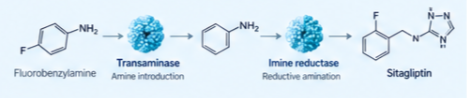
Chiral amine formation through an engineered biocatalytic route.
Protein Design Space is an independent scientific webspace for enzyme discovery, protein engineering, biocatalysis, green chemistry, computational design, patent intelligence and scalable biomanufacturing.
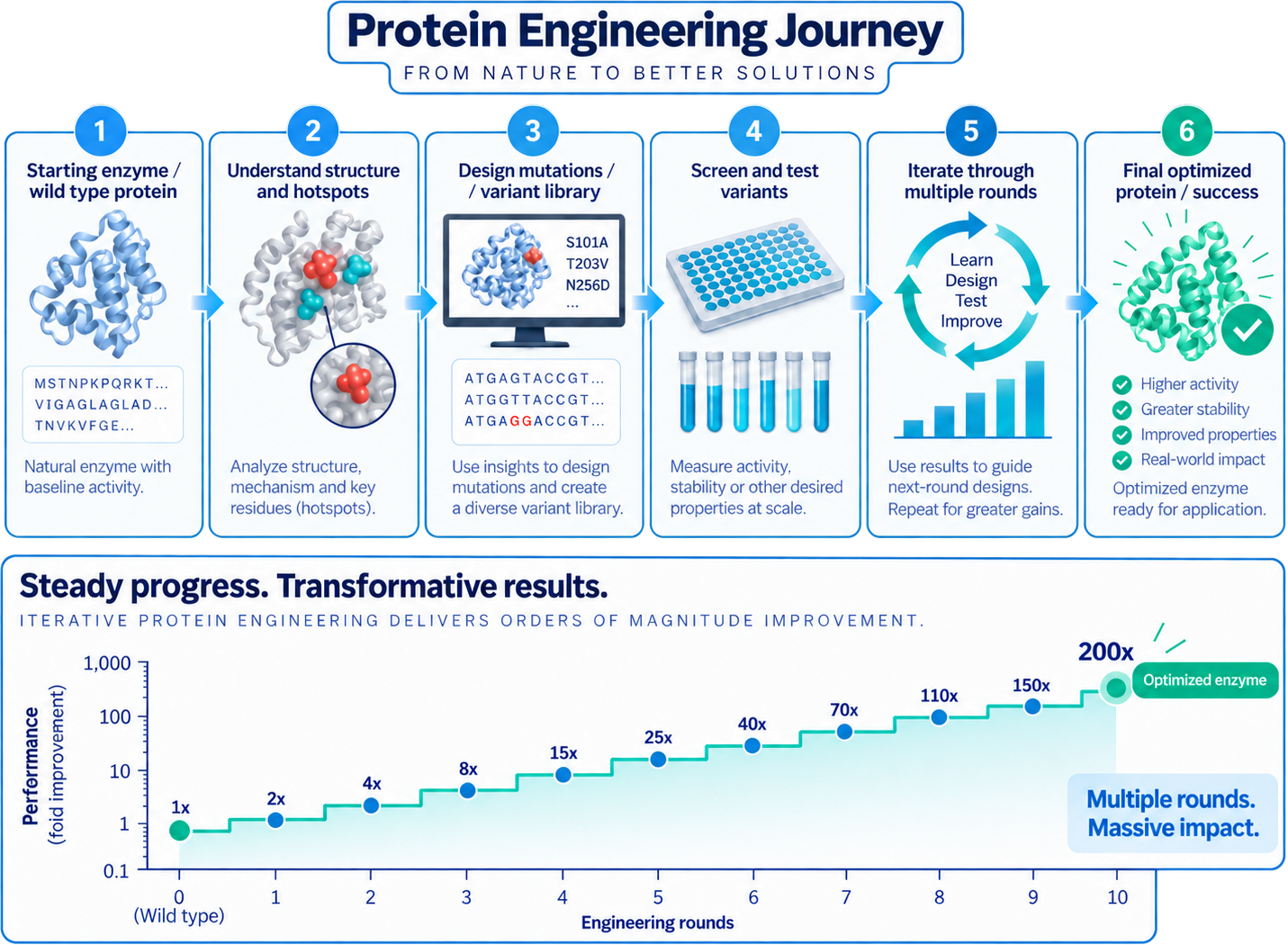
A practical protein-engineering workflow connects biological diversity, sequence and structure analysis, variant design, expression, screening, process development and application validation. The aim is to move systematically from discovery to an industrially relevant solution while considering performance, scalability, sustainability and intellectual-property space.
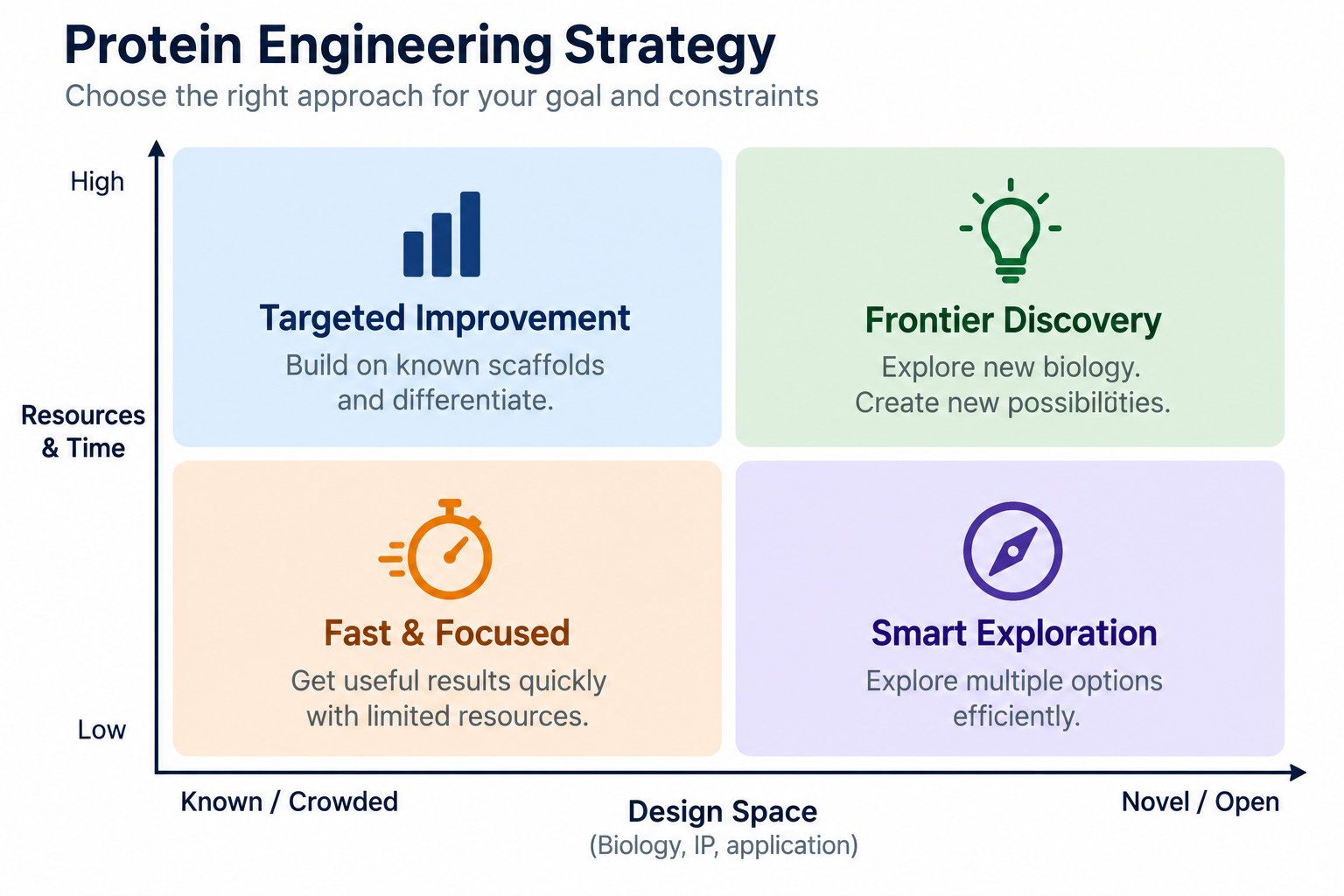
The right programme depends on available time and resources, how crowded the technical or IP space is, and whether you already have a workable starting scaffold.
The specific pharmaceutical process-redesign examples. These are useful benchmarks for waste reduction even when the redesigned route is not necessarily enzyme-based.
Chiral amine formation through an engineered biocatalytic route.
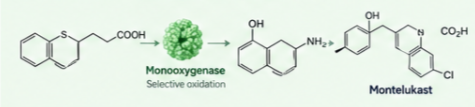
Selective reduction as a cleaner route to a key pharmaceutical intermediate.
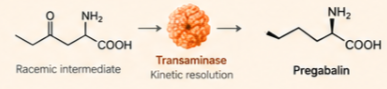
Biocatalytic kinetic resolution for a valuable chiral building block.
Industrial Biotechnology & Biomanufacturing Scientist
PhD molecular and cellular biologist with 19+ years of industrial biotechnology R&D experience spanning industrial enzymes, protein engineering, recombinant proteins and biologics, precision fermentation, downstream processing, analytics, scale-up and commercial translation.
Protein and enzyme variant discovery, rational design, directed evolution, screening and global application programs.
Fermentation, downstream processing, analytics, process troubleshooting and manufacturability.
Built an integrated 1–100 L mycoprotein pilot platform and developed a commercial-scale manufacturing concept.
Multidisciplinary development across therapeutic proteins, peptides, vaccines, antibodies and microbial enzyme programs.
A compact, task-based set of resources for discovery, structure, mutation design, visualisation and IP.
Current protein-engineering research.
Open Nature topic ↗Protein engineering for process scale-up.
Open DOI ↗Directed-evolution principles.
Open DOI ↗Semi-rational design strategies.
Open DOI ↗Enzyme engineering and biocatalysis.
Open resource ↗Find homologues and sequence patterns.
Homologue sequence search.
Open BLAST ↗Sequence and functional annotation.
Open UniProt ↗Sequence-property profiles.
Open ProtScale ↗Multiple-sequence alignment.
Open Clustal Omega ↗Fast large-family alignment.
Open MAFFT ↗Alignment for conservation analysis.
Open MUSCLE ↗Consistency-based alignment.
Open T-Coffee ↗Retrieve or build 3D models.
Predicted protein structures.
Open AlphaFold DB ↗Homology structure modelling.
Open SWISS-MODEL ↗Experimental protein structures.
Open RCSB PDB ↗Protein modelling and design.
Open Rosetta ↗Structure and function prediction.
Open I-TASSER ↗Remote homology and template search.
Open HHpred ↗Choose hotspots and stabilising variants.
Mutagenesis hotspot selection.
Open HotSpot Wizard ↗Stability mutation design.
Open FireProt ↗Analyse substrate and product access.
Tunnel and access-path analysis.
Open CAVER ↗Channel and tunnel analysis.
Open ChannelsDB 2.0 ↗Inspect structures and trajectories.
Protein structure visualisation.
Open PyMOL ↗Molecular-dynamics visualisation.
Open VMD ↗Map claims and patented sequences.
Patent and scholarly search.
Open Lens ↗Patent-disclosed protein sequences.
Open PatSeq Finder ↗A simple workflow for moving from large sequence and mutation spaces to a small, testable set.
This is a simple hypothetical example to show the logic. Imagine your enzyme has Methionine at position 148 (M148), and you want to know whether this position is worth engineering.
Catalytic activity alone is not enough. A useful industrial enzyme must combine performance, robustness, manufacturability and process compatibility.
A strong protein-design programme can combine sequence and structure analysis with patent intelligence: identify claimed sequence families and mutation positions, then explore genuinely distinct scaffolds, underused structural regions and alternative process architectures.
Protein engineering, enzyme discovery, biocatalysis, green chemistry, patent landscapes, technical reviews and industrial biotechnology.